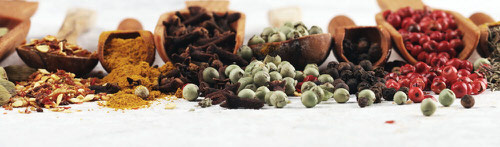
Monterey Bay Spice Co. supplies high quality bulk herbs, bulk spices and herbal teas.
About Us Co-Packing Catalog Contact Us Account Login  

toll free.800.500.6148
phone.831.426.2808
fax.831.426.2792 support@herbco.com

Monterey Bay
Spice Company
719 Swift Street, Suite 62
Santa Cruz, CA 95060

Anise seed


Anise seed

Scientific Name: Pimpinella Anisum
Family: Umbelliferae, Carrot

AKA: Aniseed, Sweet Cumin, Chinese Anise, Illicium, Star Anise
Parts Used: Essential oil and seeds
Active Compounds: Contains 70-90% Anethole from the 1-4% volatile oil, fatty acid, flavonoids, furanocoumarins, sterols, proteins, and phenylpropanoids, coumarins, and carbohydrates.

Background: Used by ancient Greeks who touted the benefits of Anise and its ability to contribute to the relief and cure of many common ailments. Ancient Romans also used it as part of their meals and it was prepared for medicinal processing to treat digestion, colic, and nausea. Some even used it as an aphrodisiac.

English herbalists started using it to treat hiccups, for lactation treatment, and for edema or water retention.  They also found it helpful to use in the fight against headaches and asthma, prostate cancer, and cholera. 


Applications: Libido/Lactation/Digestion/Skin

Ancient medical practice used Anise for a variety of ailments, from asthma to indigestion. As an expectorant, it could relieve the symptoms of asthma, but is more commonly used to clear up cold symptoms.

Libido: Known for its ability to help with impotence and frigidity due to the estrogenic effect of the anethole.

Lactation: Helps in milk production when seeds are used for their mild estrogenic effect.

Digestion: Used to treat indigestion and colic because it helps reduce nausea, gas and bloating.  Also used to treat toothaches when taken orally. 

Skin: Treats lice and scabies when seeds are used topically on effected areas.

Description:
Native to the Mediterranean, Asian, and North African regions, this plant grows up to 2 feet tall and has grows annually to produce feather-laden leaves and yellow flowers. It is cultivated in gardens and grown on a commercial scale.  When seeds ripen in warm months, they are harvested and dried in trays.

Dosage:
Syrup: add 7 tsp seeds to 1 qt boiling water until contents simmer to 1-1/2 pints. Strain, add 4 tsp honey and glycerin and take the concoction as a syrup in doses of 2 tsp every few hours for coughs. Two tablespoons can be taken daily for memory building.

Infusion: Crush seeds to release volatile oil and pour 1 cup boiling water over 1-2 tsp seeds. Let stand 5 minutes and then drink 1 cup, three times a day.

Oil: Take 1 drop of the oil orally by mixing it with 1/2 tsp of honey.

Safety:
Do not use if pregnant, unless used as a flavoring in food. Only take essential oil orally with a doctor's supervision. High doses of the oil can cause nausea and vomiting.

More Bulk Herbs and Spices Information:

Agar
Agrimony
Alfalfa leaf
Alkanet
Allspice
Aloe
Angelica


For educational purposes only
This information has not been evaluated by the Food and Drug Administration.
This information is not intended to diagnose, treat, cure, or prevent any disease.


 E-mail this product to a friend


(what's this?)


Your Shipping Basket is Empty